
The 4As of AI, and why your sellers (and their customers) can tell the difference.
I've had the chance to sit in on several Sales Kickoffs lately, for a handful of different clients. The format is familiar. Product marketing takes the stage and walks the field through the current and future roadmap. Pretty standard stuff.
Then we get to the AI section.
Every time, I'm a little surprised. This far into the AI era, we're still serving word salad, often from the very experts whose job is to tell a clear, compelling story about the product. Meanwhile I'm watching rooms full of intelligent sellers, many of whom build their own AI tools on nights and weekends, look dazed, confused, and occasionally downright annoyed at what's being pitched to them.
Here's the twist: at SKO, the sellers are the customers. Product marketing is the seller. And the audience isn't buying.
A week later, the same scene plays out in the field. Same script, one seat down the table.
The buzzword era is over
There was a moment when you could sprinkle "AI-powered" on a slide and be deemed smart and credible. That moment has passed. Buyers are getting sharper and more skeptical, and I see three reasons why.
1. Innovation isn't top-down anymore
When Henry Ford rolled out the Model T, most of us weren't building cars in the garage. When Steve Jobs put a personal computer in front of us, most people weren't soldering boards and forming opinions about what they'd do differently. We just said, "Sure, Henry. Sure, Steve. Take my money."
AI doesn't work that way. Your buyer is also a builder. They have opinions, and they have receipts.
2. The wall used to be code. Now it's conversation.
We all knew that friend who'd crack open Excel macros and write VBA, or the kid teaching himself Java and C++. (Nerd alert: that friend was me.) The barrier to building was a language most people didn't speak.
Now the language is English. As Chef Gusteau put it in Ratatouille, "Anyone can cook." Today anyone can code, and not just kind of. People are building better and faster every single day.
3. Differentiation has a half-life
A differentiator is valuable partly because others can't easily reproduce it. In a market moving this fast, that advantage has a short shelf life. I regularly see demos that look dated on launch day next to what people in the room are already doing in their personal lives and their own businesses.
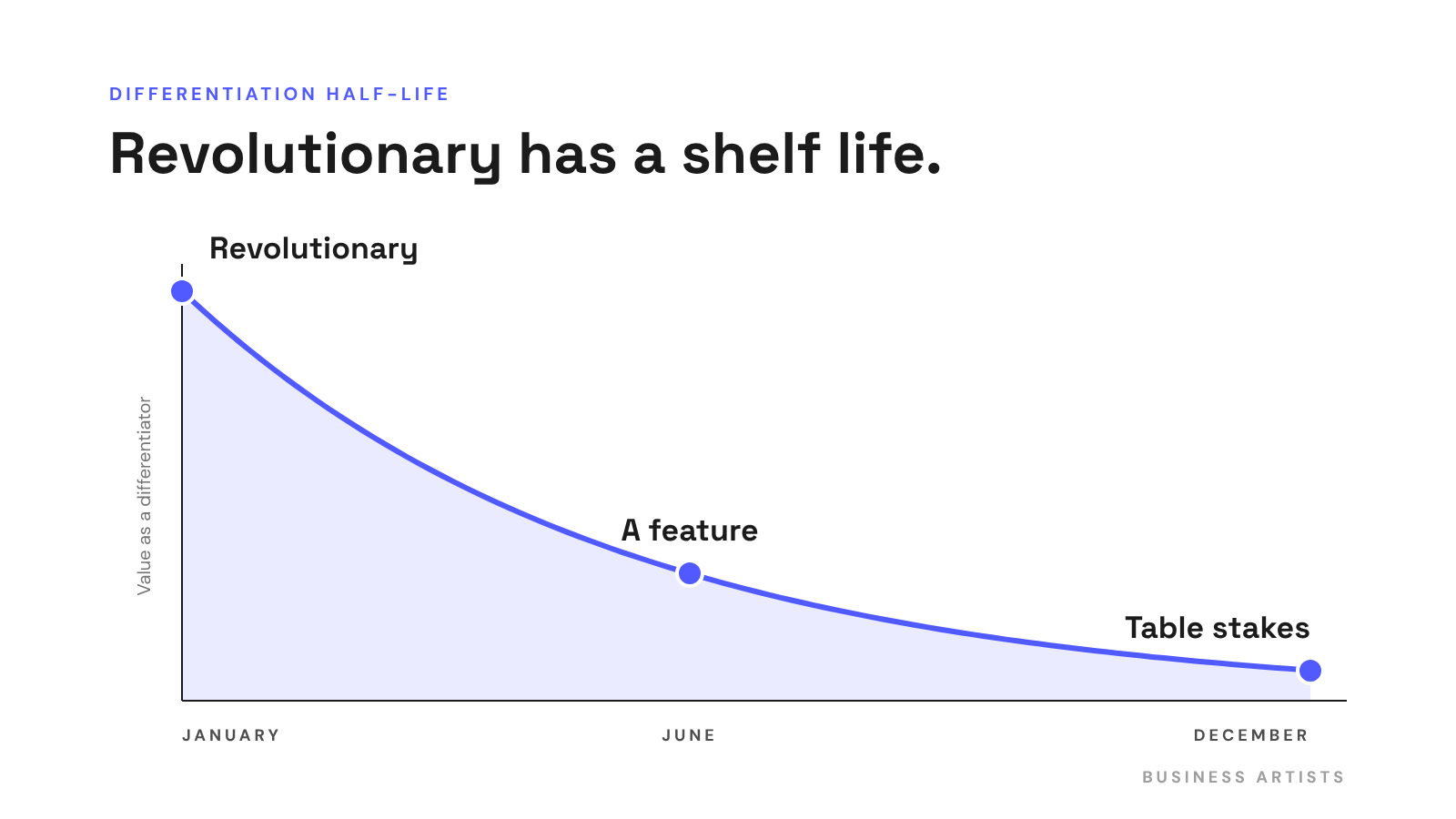
What's revolutionary in January is a feature by June and table stakes by December.
The paradox: they believe in AI. They may not believe in you.
With most emerging technology, the skepticism was about whether the thing worked at all. You had to prove it. The car drives. The computer turns on.
AI flips that. Many customers already know it works because they've felt it firsthand. They've watched a well-built prompt produce something impressive. They've finished real work faster. They've seen how powerful these models are, and how quickly they keep improving.
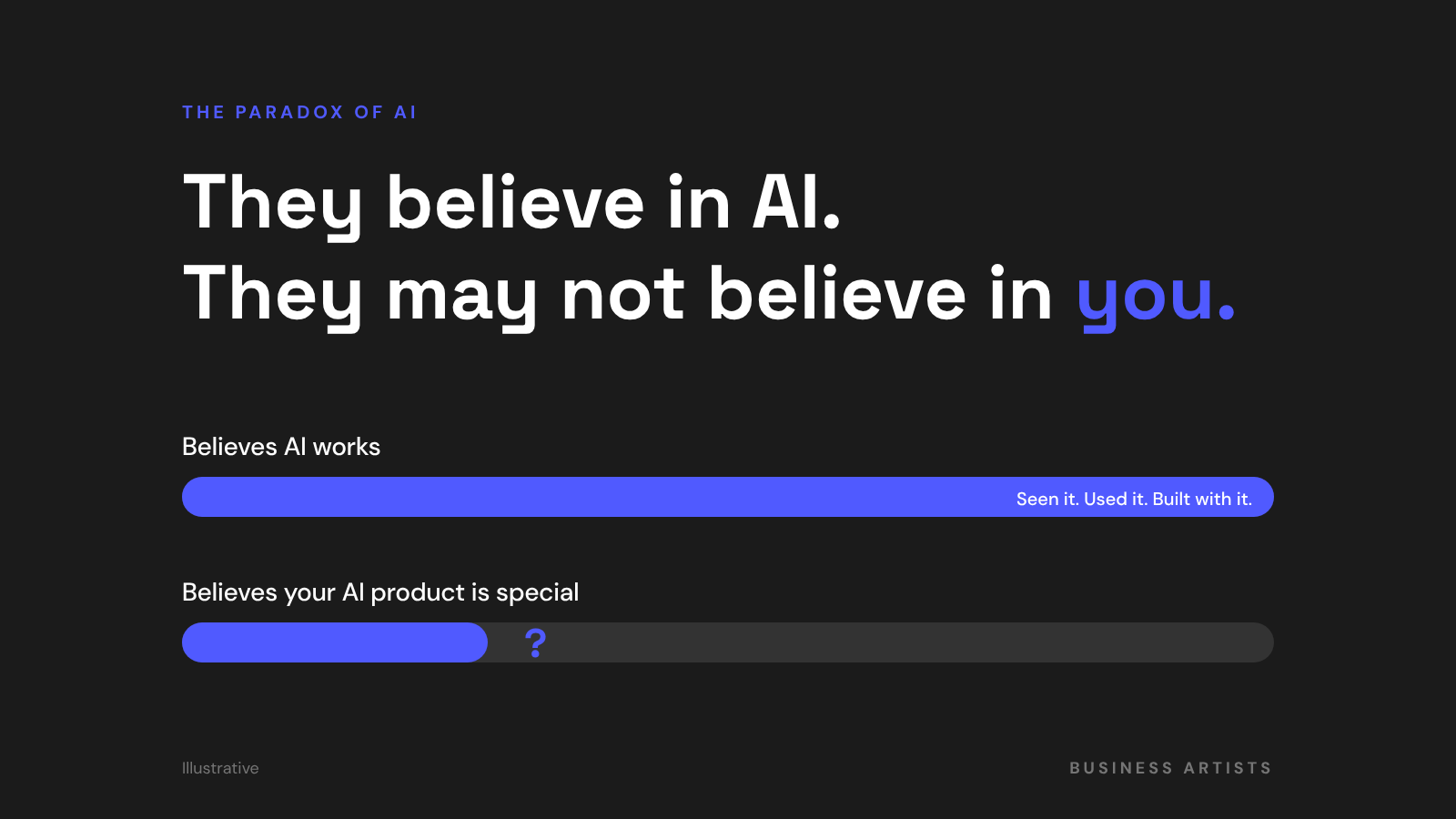
That confidence makes them more skeptical of the people selling it, not less. A buyer can believe AI is extraordinary and, in the same breath, wonder whether your AI product is anything special.
Words matter: the 4As of AI
Back to the chain. Product marketing teaches sellers. Sellers teach customers. For that chain to hold, everyone has to speak the same language, and right now our AI vocabulary has gotten ahead of operating reality.
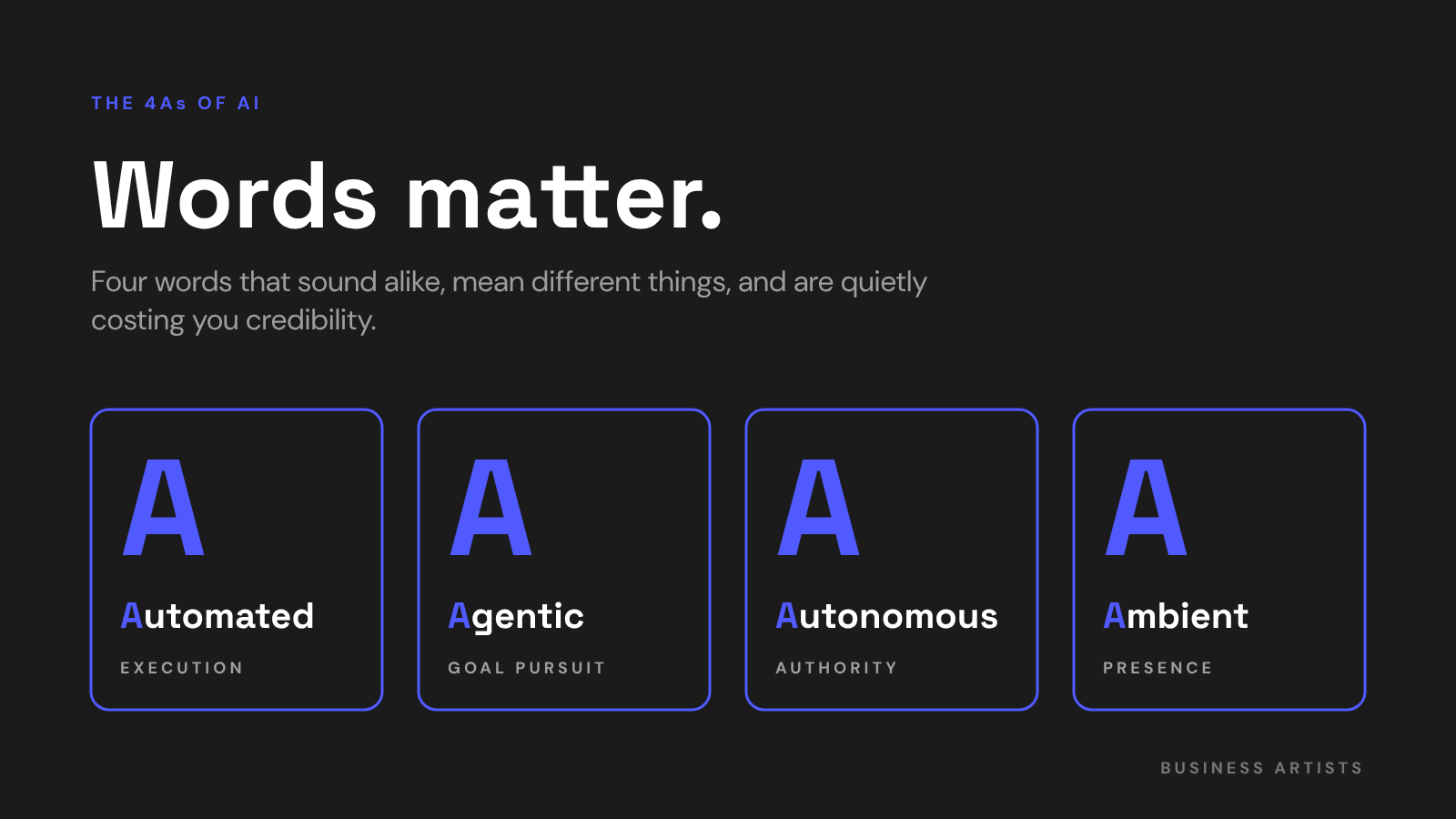
There are four similar-sounding words that are connected, constantly misused, and worth getting right. I call them the 4As of AI: automated, agentic, autonomous, and ambient.
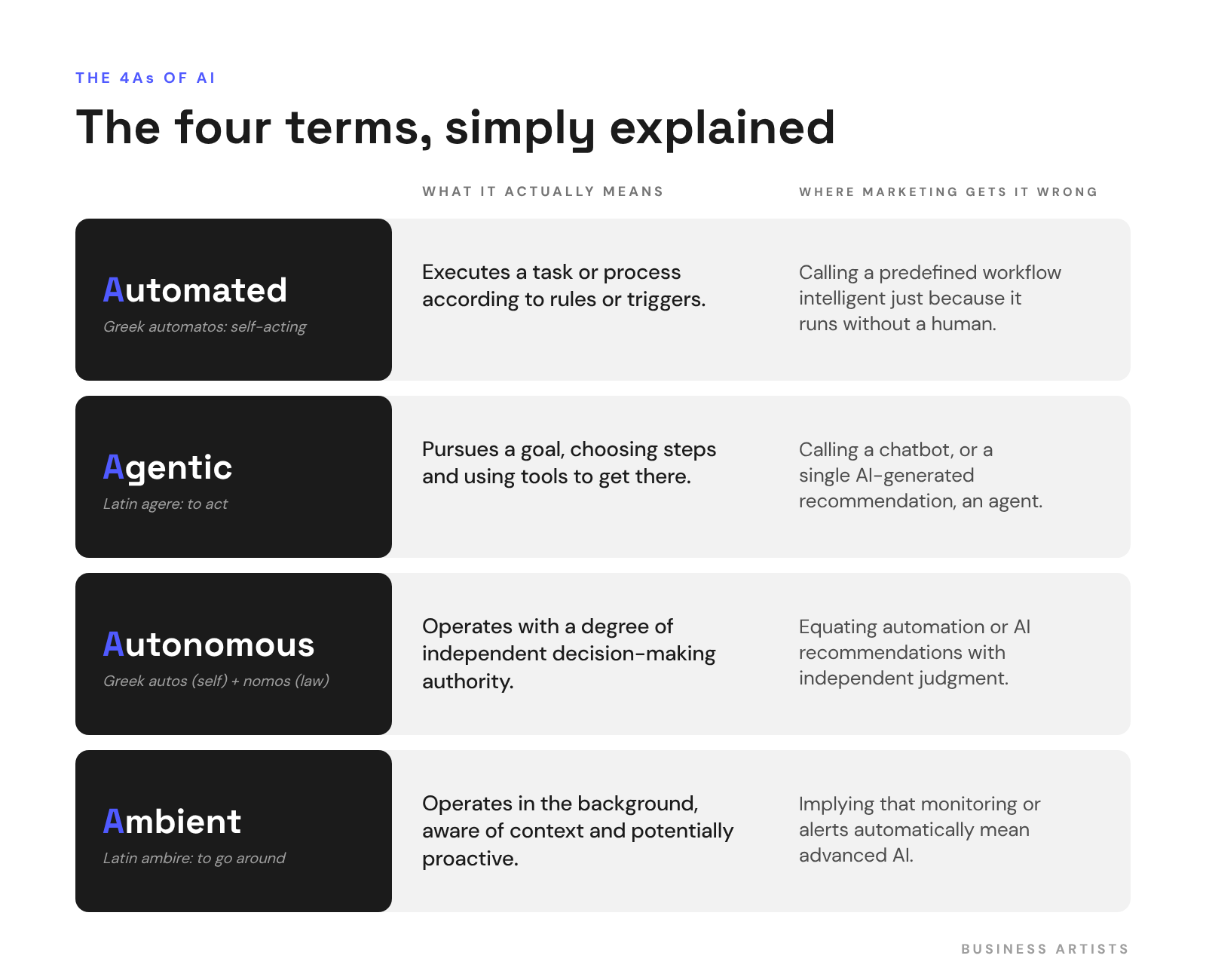
Automated (Greek automatos, "self-acting") executes a task or process according to rules or triggers. Where marketing gets it wrong: calling a predefined workflow intelligent because it runs without a human.
Agentic (Latin agere, "to act") pursues a goal, choosing steps and using tools to get there. Where marketing gets it wrong: calling a chatbot, or a single AI-generated recommendation, an agent.
Autonomous (Greek autos, self, plus nomos, law) operates with some degree of independent decision-making authority. Where marketing gets it wrong: treating automation or recommendations as independent judgment.
Ambient (Latin ambire, "to go around") operates in the background, aware of context and potentially proactive. Where marketing gets it wrong: implying that monitoring or alerts automatically mean advanced AI.
Four questions, not four stages
It's tempting to read these as a maturity ladder. They aren't. Each one answers a different question.
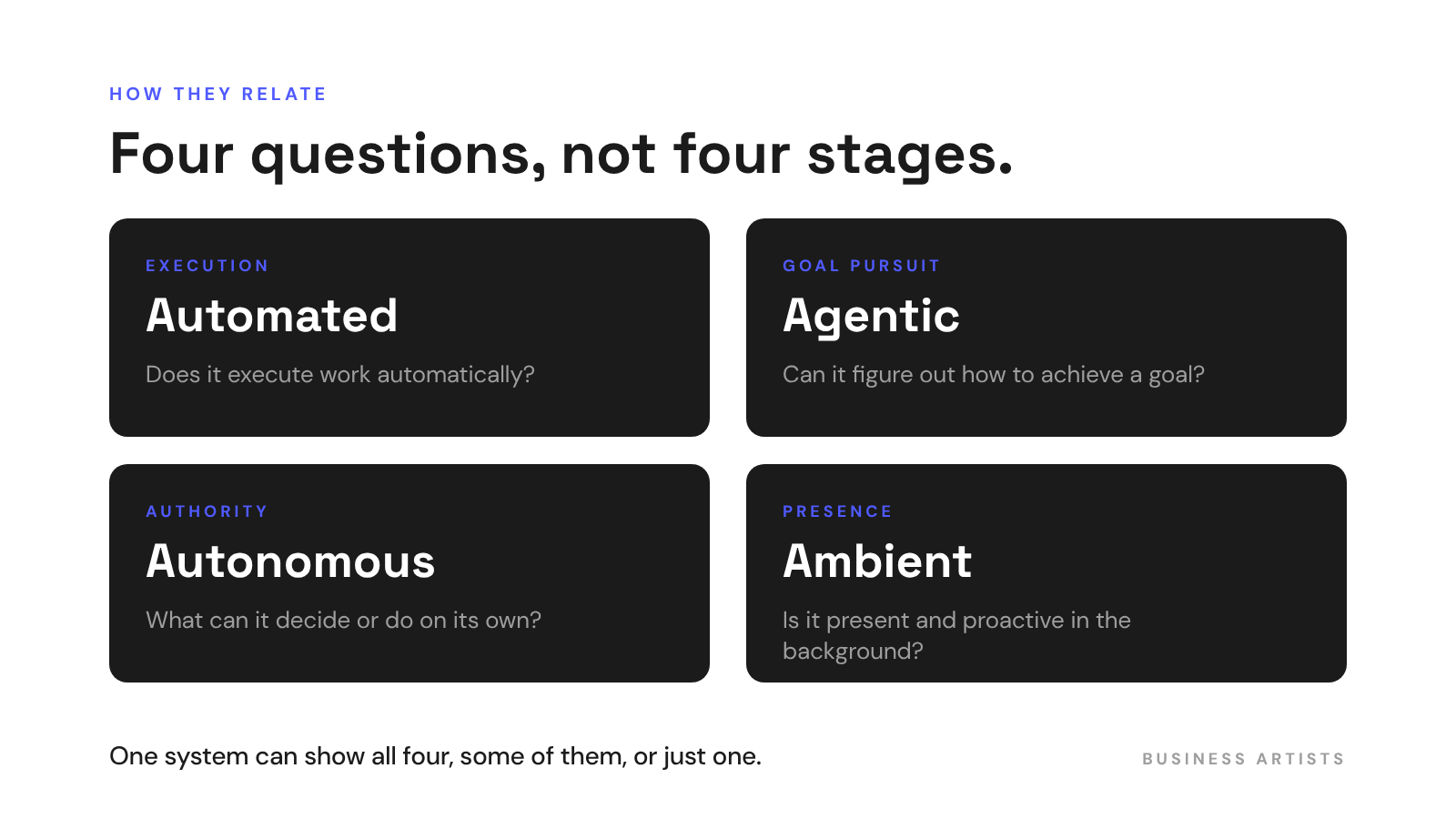
A single system can show all four, a few, or just one. Something can be ambient and automated without being agentic or autonomous at all.
Where this costs you deals
Using these words isn't the problem. Promising a level of intelligence, independence, or impact the technology doesn't deliver is. That shows up three ways.
- Overpromising capability. A buyer hears "autonomous" and pictures a system that diagnoses, decides, and fixes on its own. In reality, it recommends an action and waits for someone to click.
- Confusing features with outcomes. "Ambient" sounds great on a slide, but nobody buys ambientness. They buy fewer outages, faster resolution, less operational grind, and better experiences.
- Underestimating governance. The more authority you give AI, the more boundaries, escalation rules, audit trails, and accountability matter. Taking humans out of a workflow doesn't automatically make the workflow better. Sometimes it just makes the mistakes faster.
The better question
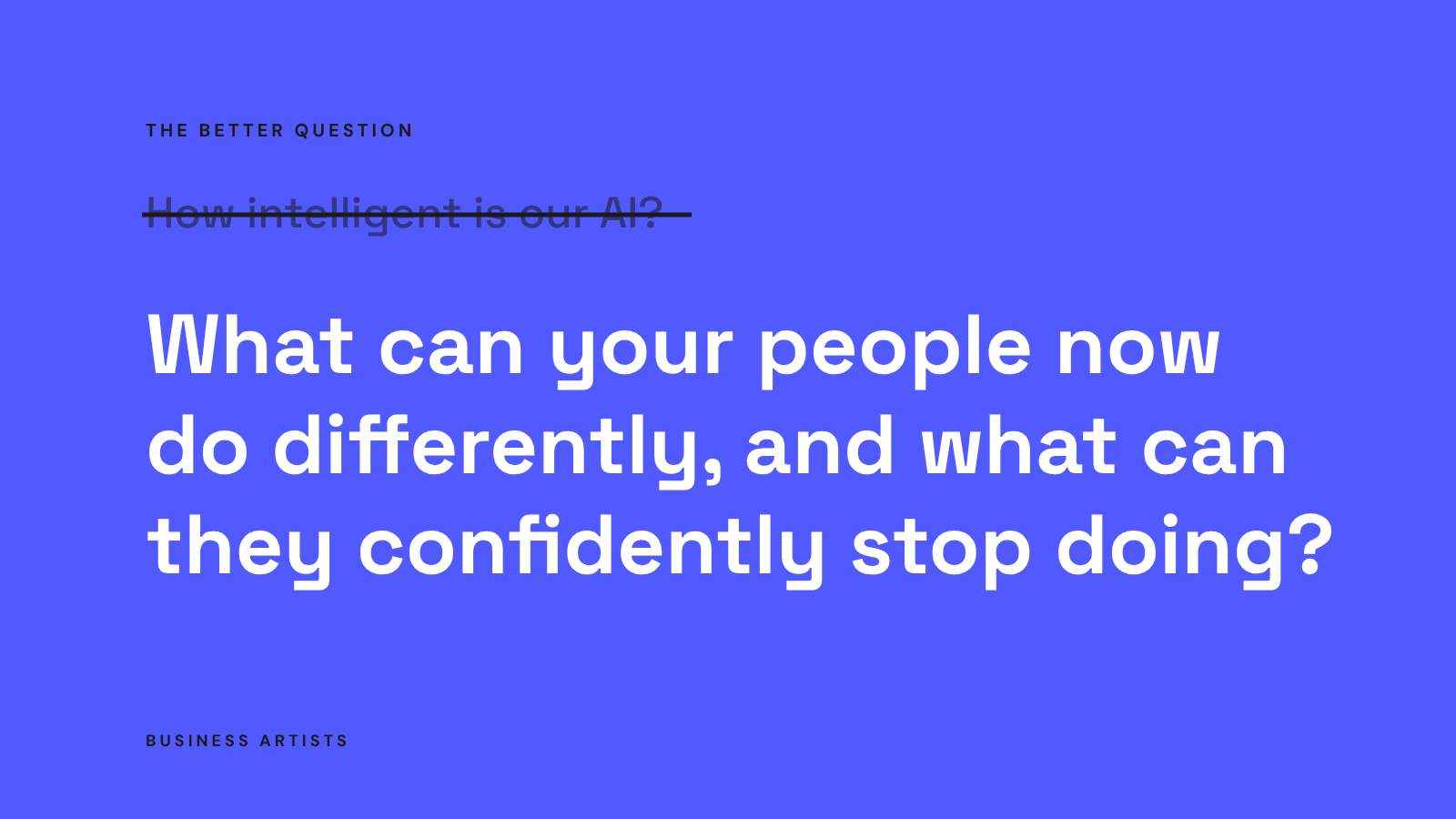
Stop asking, "How intelligent is our AI?"
Start asking, "What can your people now do differently, and what can they confidently stop doing?"
That's a story a skeptical, AI-literate buyer will lean in for. And it's one a room full of sellers can repeat without wincing.
